
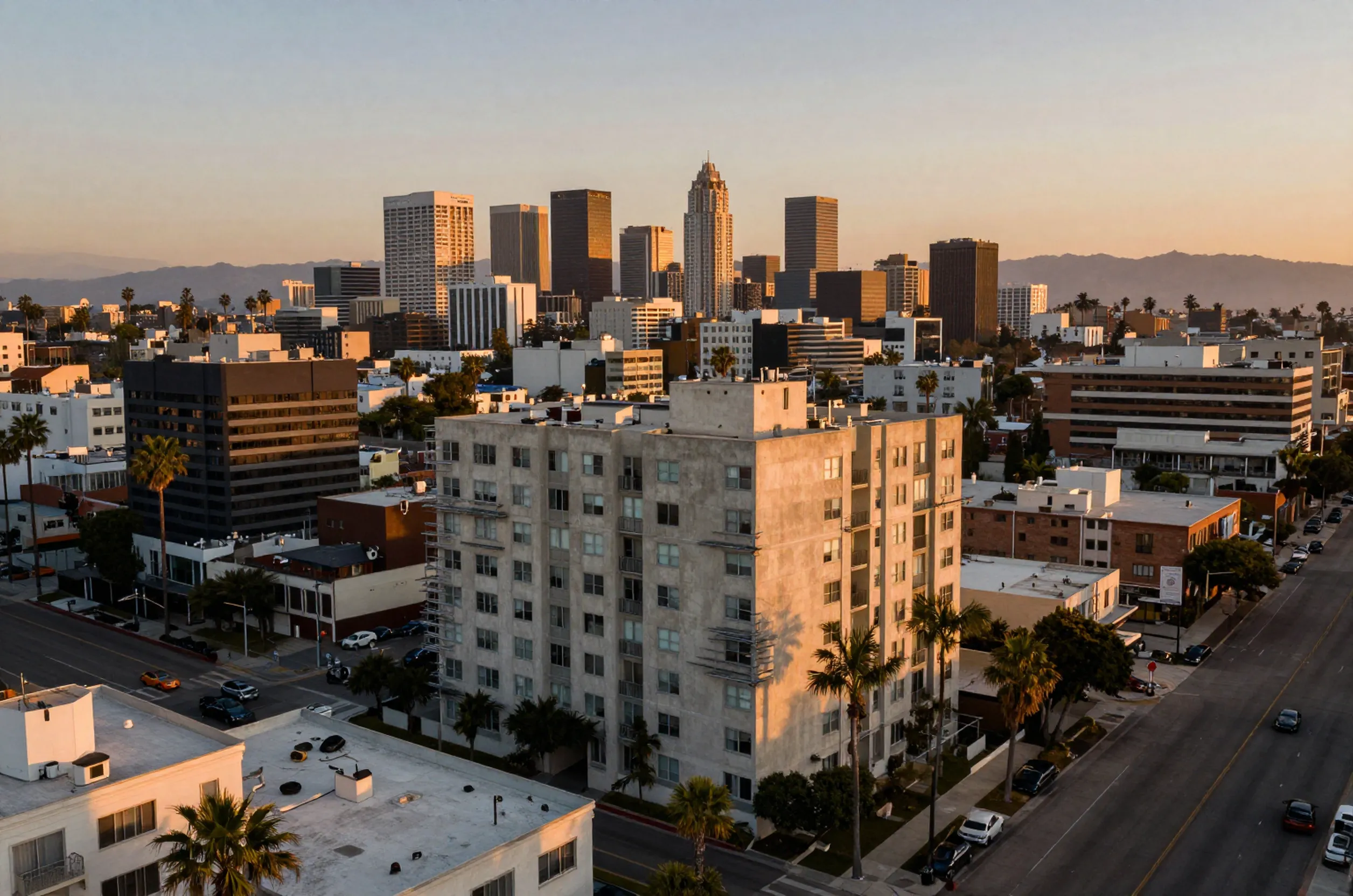
West Hollywood sits on active seismic ground, and older concrete buildings do not always behave the way modern codes expect. That is why Understanding West Hollywood’s seismic retrofit ordinance matters for owners, lenders, and managers of multifamily or commercial assets. Ordinance 17-1011 created mandatory strengthening rules for non-ductile concrete and pre-Northridge steel moment frame buildings, and the compliance clock starts when the city issues a notice. Waiting until the last milestone rarely saves money—it usually compresses design, peer review, and construction into one expensive window.
What the Seismic Retrofit Ordinance Covers
The West Hollywood seismic retrofit program was adopted to reduce earthquake injury and collapse risk in vulnerable existing buildings. For non-ductile concrete structures, Chapter 13.36 targets buildings constructed under standards enacted before the 1979 Uniform Building Code (with local amendments). Poor detailing in older concrete frames can leave columns, beams, and joints unable to carry gravity loads once earthquake drift increases.
- Non-ductile concrete buildings: Reinforced concrete structures built under pre-1979 standards are the core focus of a non ductile concrete retrofit for West Hollywood.
- Pre-Northridge steel moment frames: Older steel moment frame buildings with known brittle connection vulnerability are also addressed under the same ordinance framework.
- Notice-driven enforcement: The Building Official’s notice to comply starts each property’s timeline for reports, plans, permits, and construction.
Official program materials are available on the City of West Hollywood Seismic Retrofit Program page.
Seismic Retrofit Requirements Owners Must Meet
Seismic retrofit requirements under Ordinance 17-1011 are phased—not a single permit event. Owners must prove existing performance, mitigate major deficiencies when present, and then complete remaining upgrades on the Phase 2 schedule.
Phase 1: Engineering Report and Major Deficiency Mitigation
An Ordinance 17-1011 engineer evaluates the building against city expectations, typically using ASCE 41 concepts and WeHo design guidelines. The report identifies deficiencies and determines whether major issues—such as incomplete load path, soft or weak story, vertical irregularity, torsion, or captive columns—must be mitigated first.
Typical Phase 1 milestones measured from notice include:
- Within 3 years: Submit the engineering report documenting deficiencies.
- Within 5 years: Submit retrofit plans for major deficiency mitigation (when required).
- Within 7 years: Obtain permits and commence Phase 1 construction.
- Within 10 years: Complete major deficiency mitigation work.
Buildings without major deficiencies still need the engineering report and must continue into Phase 2. They are not excused from the overall program.
Phase 2: Complete Retrofit
Phase 2 closes remaining deficiencies so the structure meets the ordinance performance path. Plan submittal, permit issuance, and construction completion follow later milestones—commonly framed around 13, 15, and 20 years from notice, subject to city extensions and published priority schedules. Treat every West Hollywood retrofit deadline as a hard project control, not a soft reminder. Taller Priority I and Priority II assets are often noticed earlier and face tighter calendars. For priority tracks and deficiency categories, see our guide on non ductile concrete retrofit requirements for West Hollywood buildings.
Why Early Engineering Reduces Cost and Delay
Indubitably, the most expensive retrofit projects start after drawings, testing, tenant coordination, and peer review have already been squeezed. Material testing, geotechnical input, and quality-assurance expectations can extend design—especially in occupied mid-rise buildings. Early engagement with a licensed structural engineer keeps the seismic retrofit ordinance path predictable. Owners should also track funding windows; West Hollywood has offered FEMA-tied grant support, and closeout rules can eliminate late applications. Review timing in our post on West Hollywood seismic retrofit grants before assuming reimbursement remains available.
ProStruct Engineering: Your Partner for WeHo Ordinance Compliance
Are you trying to translate Ordinance 17-1011 language into a clear engineering schedule for your West Hollywood property?
Enter ProStruct Engineering!
At ProStruct Engineering, we support owners with structural inspections, calculations, and permit-focused retrofit plans. On the back of vast industry experience, we help move listed buildings from inventory status to a documented compliance path with fewer surprises.
Our Key Features
- Ordinance-aware scoping: We structure evaluations around WeHo expectations, major-deficiency logic, and ASCE 41 performance targets.
- California licensed expertise: Our team prepares design packages that communicate clearly to Building and Safety reviewers.
- Milestone-driven delivery: We map report, plan, permit, and construction windows so your West Hollywood retrofit deadline does not become a crisis.
- Practical coordination: We align owners, architects, and contractors around constructable retrofit strategies for occupied buildings.
Explore ProStruct’s seismic retrofit and foundations services when you need a compliance-ready engineering partner.
West Hollywood Seismic Retrofit Ordinance – Frequently Asked Questions (FAQs)
Q) Does a city notice automatically mean my building fails?
No. A notice means your property is within the program’s scope and must be evaluated. The engineering report determines whether major deficiency mitigation and full retrofit work are required.
Q) Who should prepare the Ordinance 17-1011 engineering deliverables?
A California-licensed structural engineer experienced with municipal seismic programs should prepare the report and retrofit design. Reviewers expect clear documentation, not informal opinions.
Q) Can I combine Phase 1 and Phase 2 work?
In some cases, completing a broader Phase 2 scope early can support schedule flexibility under city rules. Your engineer should confirm whether accelerated combined design is practical for your building.
Q) What happens if I miss a West Hollywood retrofit deadline?
Missed milestones can trigger enforcement action, compressed redesign, and higher construction premiums. Early planning is the most reliable way to protect both compliance and budget.
Conclusion
To conclude, West Hollywood’s seismic retrofit ordinance is a structured safety program—not an optional upgrade. Property owners who understand seismic retrofit requirements, engage an Ordinance 17-1011 engineer early, and respect each West Hollywood retrofit deadline are far better positioned to protect residents, tenants, and asset value.
ProStruct Engineering comes to help clients on the back of vast industry experience and expertise. We have the right skills to handle your non ductile concrete retrofit for West Hollywood with utmost proficiency. Whether you need screening-level clarity or a full permit set, ProStruct Engineering exhibits a level of professionalism for seismic retrofit requirements across California. Contact us today to map your compliance path with confidence.