
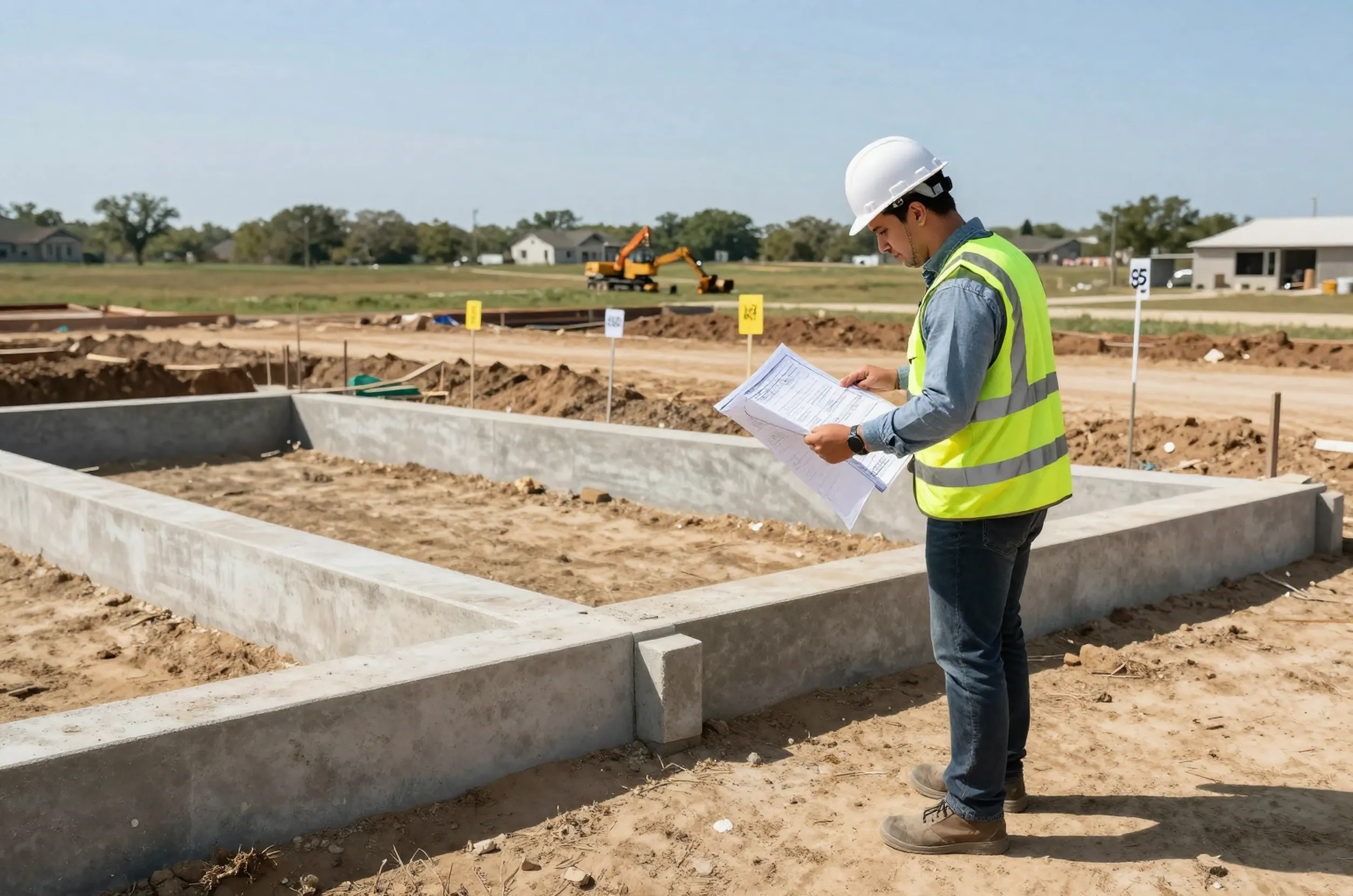
On a Dallas development site, foundation risk is rarely about bad luck—it is about decisions made before the first truck arrives. From a single infill home to an eight-unit building, the expansive North Texas clay underneath punishes shortcuts with cracks, callbacks, and stalled permits. The good news is that most of this risk is controllable. A structural engineer for foundation inspection in Dallas can flag the weak points early, when a smarter detail still costs little. This guide walks through practical ways to reduce foundation risk across the 1-to-8 unit range.
Start With the Soil, Not the Slab
The single biggest mistake on small Dallas developments is designing a foundation before anyone understands the ground. Much of the Dallas–Fort Worth metro sits on highly plastic clay that swells with moisture and shrinks in drought, lifting and dropping anything resting on it.
A careful residential structural engineer in Dallas treats the geotechnical report as the starting line, not a formality.
- Order borings early: Plasticity index, active-zone depth, and bearing capacity should be known before the foundation type is chosen.
- Test the actual lot: Two parcels a block apart can behave very differently, so borrowed soil data is a hidden liability.
- Design to the data: Let the report drive the system selection rather than forcing the soil to fit a reused detail.
Match the Foundation System to Real Loads
It is tempting to assume an eight-unit building is just a bigger house, but the jump from one unit to eight changes the engineering completely. Stacked floors funnel heavier, concentrated loads into footings, piers, and grade beams, and taller multifamily structures are far less forgiving of differential movement.
Size Every Element for Demand
A slab that comfortably carries a one-story cottage can be badly undersized beneath a three-story footprint. Quality Dallas structural engineering sizes each footing, pier, and grade beam for the load it actually carries—not a habit number.
Choose the Right System
Post-tensioned slabs, drilled piers with grade beams, and stiffened mats each suit different soil and load combinations. Selecting the wrong one is one of the most expensive risks on a small development, because the fix usually arrives after the concrete is poured.
Trace a Continuous Load Path
Columns, bearing walls, and beams should be followed from roof to footing so every load lands where the foundation expects it. Gaps in that path are quiet failures waiting to surface as cracked drywall and uneven floors.
Control Moisture and the Movement It Causes
Because clay moves with water, moisture management is foundation management. Much of the risk on Dallas sites comes from water that is allowed to pool, drain unevenly, or cycle dramatically between seasons.
- Grade away from the structure: Positive slope keeps water from collecting against footings and grade beams.
- Plan drainage early: Gutters, downspout extensions, and site drainage belong in the design, not as an afterthought.
- Stabilize the building envelope: Consistent moisture under the slab reduces the seasonal heave and shrink that crack rigid foundations.
A thorough structural engineer in Dallas weaves these details into the plan set so the foundation is protected from the forces that move it.
Verify in the Field, Not Just on Paper
A sealed plan only reduces risk if the build matches it. On multi-unit sites, the gap between drawings and dirt is where problems hide—misplaced piers, shallow embedment, or rebar that drifts from spec.
That is why a structural engineer for foundation inspection in Dallas should confirm the critical stages on site, before they are buried. Field verification of excavation, reinforcement, and pier depth catches small deviations while they are still cheap to correct, and it gives reviewers the documentation they expect.
ProStruct Engineering: Your Partner for Lower-Risk Dallas Foundations
Are you planning a 1-to-8 unit project and want the foundation handled without surprises?
Enter ProStruct Engineering!
We bring the same disciplined approach to small multifamily foundations that we bring to complex commercial builds, pairing real geotechnical data with the right system for your site.
Our Key Features
- With more than 35 years of combined experience and thousands of residential projects delivered, our Dallas structural engineering is grounded in field-tested judgment.
- We design every foundation around the actual soil report, never a recycled detail from another lot.
- Our fixed, transparent pricing and quick turnaround keep your budget and permit schedule on track.
- We coordinate proactively with your architect and builder. Explore prostructengineering.com to see our full range of residential and commercial services.
Reducing Foundation Risk – Frequently Asked Questions (FAQs)
Q) What is the most common cause of foundation risk on Dallas development sites?
Designing for an idealized subgrade instead of the lot's actual expansive clay. Site-specific soil data removes most of that guesswork.
Q) Do small 1-to-8 unit projects really need a foundation inspection?
Yes. The stakes multiply with every unit, so field verification of piers, reinforcement, and embedment protects both safety and budget.
Q) When should I bring in a structural engineer?
As early as schematic design, so soil, loads, and drainage shape the foundation before costly decisions are locked in.
Conclusion
Foundation risk on Dallas 1-to-8 unit sites is not inevitable—it is the predictable result of skipping soil data, mismatching the system, ignoring moisture, or never verifying the build. Address those four areas and you turn the region's difficult clay into a manageable, code-compliant path from boring to final inspection.
ProStruct Engineering comes to help clients on the back of vast industry experience. Whether your build is a single residence or a small multifamily project, our team is ready to deliver dependable Dallas structural engineering that reduces risk long before you break ground.