
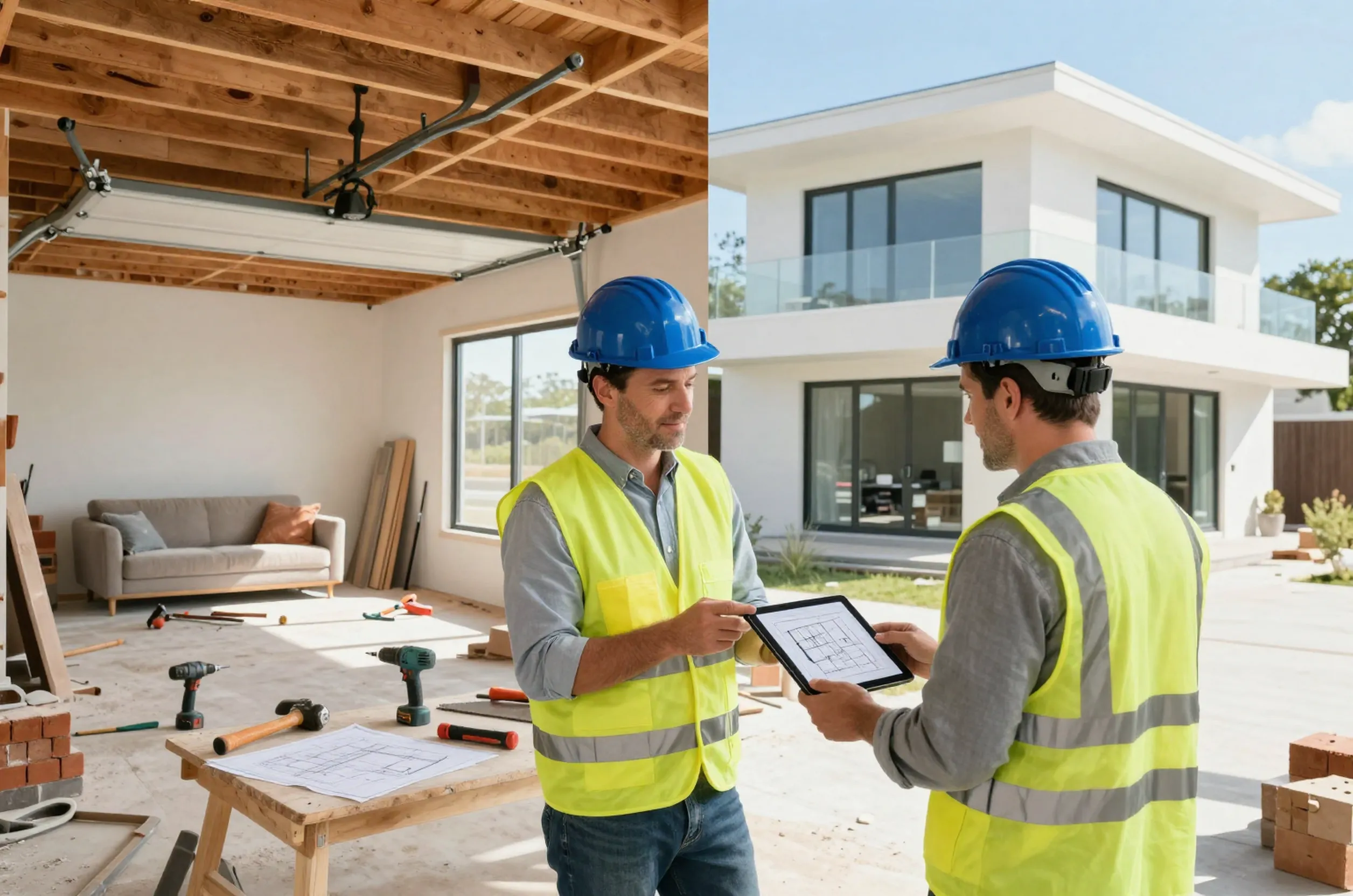
Choosing between a garage conversion and a new detached ADU in San Diego is not just a design preference. It is a permit and engineering decision. In real-world planning, garage conversion vs detached ADU comes down to what your lot can approve quickly and what your structure can safely support.
San Diego has created more ADU opportunities, but approvals still depend on careful interpretation of local rules. Owners who skip front-end analysis often face redesign cycles, while teams with a clear technical roadmap usually move faster.
What San Diego ADU Regulations Mean for Your Strategy
San Diego follows California ADU law while applying local implementation standards, review procedures, and development constraints. That means both options can work, but only if the project is aligned with code realities from the beginning. Before selecting a path, review the City of San Diego ADU regulations and California HCD ADU guidance.
Inarguably, both paths can deliver excellent permitted living space, yet they present different risk profiles:
- Garage conversion: Reuses existing footprint, often reducing site disturbance and shortening early planning.
- Detached build: Improves design freedom and privacy but may require broader site and utility coordination.
- Both options: Need complete structural documentation and permit-ready plans.
Garage Conversion: Faster Start, Higher Existing-Condition Risk
Garage conversions are frequently viewed as one of the most cost-effective ADU ideas in San Diego. That can be true when the existing structure is healthy and the layout can be adapted without major structural intervention.
When Conversion Usually Performs Best
- The garage passes a preliminary structural foundation check with limited corrective work.
- Framing and geometry support efficient room planning, egress, and utility routing.
- Seismic upgrades are manageable and can be integrated without major demolition.
Where Owners Commonly Get Surprised
Many garages were built as storage space, not conditioned habitation. If a complete load-bearing assessment is skipped, hidden issues appear late and disrupt schedule:
- Undersized framing or weak lateral load paths.
- Aging slab conditions, moisture concerns, or uneven elevations.
- Additional scope for retrofitting existing walls, hold-downs, and diaphragm continuity.
When that happens, "quick conversion" can become a revision-heavy project.
Detached ADU Build: More Freedom, More Upfront Scope
A detached ADU usually gives better privacy, cleaner circulation, and stronger long-term flexibility. For owners focused on rental performance or multigenerational planning, detached units often outperform in functionality.
Why Detached Builds Win for Some Lots
- Greater floor plan freedom and better placement for light and outdoor use.
- Stronger separation from the main home, which many occupants value.
- New structural systems designed from scratch around current code expectations.
Detached construction still requires deeper early coordination on utility connections, site access, and setbacks, so pre-design discipline is essential.
A Decision Framework That Prevents Rework
Undoubtedly, the best way to settle garage conversion vs detached ADU is to compare both options with the same technical checklist:
- Code pathway: Confirm overlays, setbacks, and review assumptions before concept design hardens.
- Existing-condition engineering: Complete a structural foundation check and load-bearing assessment for any conversion path.
- Retrofit map: Define likely reinforcement items, including retrofitting existing walls, before contractor pricing.
- Utility strategy: Validate service routing and site access for permit and construction practicality.
- Budget comparison: Use realistic risk allowances for both options, not simplified averages.
For related planning context, see what it takes to build an ADU in California and ProStruct's ADU structural engineering services.
ProStruct Engineering: Your Partner in Choosing the Right ADU Path
Enter ProStruct Engineering!
When clients evaluate garage conversion vs detached ADU, we provide structural clarity to support confident decisions. Thanks to a qualified team of seasoned professionals, we align feasibility, code compliance, and constructability before avoidable scope creep begins.
Our Key Features
- Strategy-first engineering: We compare both ADU pathways through permit risk, structural scope, and timeline impact.
- California code fluency: Our process reflects seismic expectations and local jurisdiction review standards.
- Transparent scope and pricing logic: We help teams define realistic work packages before detailed design.
- Cross-discipline coordination: We work with architects and consultants to keep submittals coherent and city-ready.
Garage Conversion vs Detached ADU – Frequently Asked Questions (FAQs)
Q) Is a garage conversion always cheaper in San Diego?
No. It often starts lower, but hidden retrofit needs can reduce or erase that advantage. Engineering verification is essential.
Q) Which option is faster to permit?
Either can move well with complete documents. Most delays come from incomplete early assumptions, not ADU type alone.
Q) Do I need structural engineering for conversion projects?
Yes. Any conversion to compliant permitted living space typically requires structural calculations and code-based documentation.
Q) Is detached better for long-term value?
It can be, especially for privacy and layout flexibility. But value depends on lot constraints, timeline goals, and total project scope.
Conclusion
To conclude, the winner in garage conversion vs detached ADU depends on evidence, not preference. Conversion can be the smartest move when existing conditions are strong and reinforcement needs are limited. Detached can be the stronger long-term strategy when flexibility, privacy, and tenant usability are top priorities.
ProStruct Engineering comes to help clients on the back of vast industry experience and expertise. We help San Diego property owners choose the right ADU path through practical engineering and permit-focused planning. If you want fewer surprises and stronger outcomes, start with a structured comparison before design commitments lock in.